


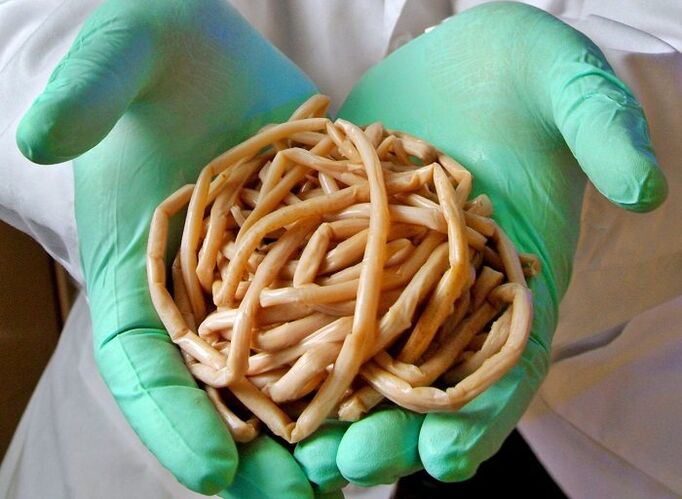
Unfortunately, parasites in the human body are not a rare phenomenon today.According to the World Health Organization, more than 4 billion people on the planet are infected or have parasitic infections.Such mass infections can be explained by: the fact that the problem is underestimated, the fact that the public knows little about the problem, and ineffective diagnosis and treatment of patients.Let's talk about parasites in more detail, it will be useful.
What organisms are called parasites?
Who are called parasites?Parasite - (from the Greek name parasitos - parasite, parasite) - lower plant and animal organisms that live outside/in other organisms (the host) and eat at its expense.
All parasites that live in the organs, in the mouth, under the skin of the body, which are capable of causing human pathology, can be divided into 3 large groups:
- Protozoa or protozoa.There are a large number of their types.But all over the planet, in different countries, you can find species like Giardia, Toxoplasma, and Trichomonas more often than others.
- Worms or helminths.This group includes worms such as: roundworms, pinworms, tapeworms, toxocara, trichinella, pig and cattle tapeworms, echinococcus, cat worms, etc.
- Ectoparasites (infecting from the outside) - fleas and ticks.
Larvae of the last group affect humans very easily, but protozoa and worms are often found completely unexpectedly.Therefore, they will be discussed below.
Parasitic organisms: how you can get infected
Most types of worms live in the body for a long time and actively multiply there, so the pathology caused by them becomes chronic and repeats all the time.At the same time, the affected organs inside cannot function properly, the immune system suffers, the person becomes most vulnerable and quickly becomes infected.
As a result, the human body:
- Run out;
- Weakening;
- allergies;
- There is poisoning with toxic substances.
This dangerous process, naturally, develops gradually, but years of ignorance about the presence of parasites in the body and, therefore, the lack of therapy become the cause of a serious condition.How can infection occur?If you know how parasites enter the human body, you can protect yourself and stay healthy.
If we focus on common pathogens in our country, the list of possible routes of infection in humans is as follows:
- Unwashed hands;
- Swimming in dirty water;
- Drinking dirty water;
- Unwashed vegetables and fruits;
- Eating raw or improperly cooked meat and fish;
- When in contact with an infectious animal;
- During sexual or oral intercourse.
The body in which the parasite lives is seriously affected, therefore it is very important to identify the pest as early as possible and start treatment.
How does the organism in which the parasite lives behave?
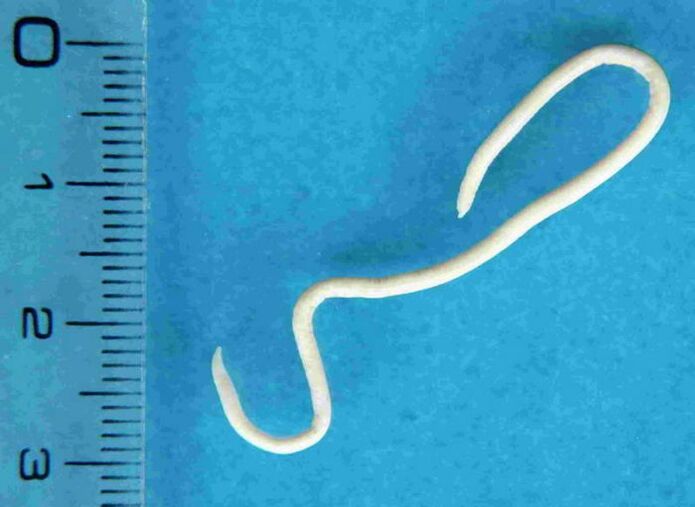
Depending on the variety, each type of parasite is localized in a specific place in the human body, so the clinical manifestations are different.But it is possible to identify common signs for all helminthiasis and some diseases caused by protozoa.
The symptoms, as shown in the table, look like this:
- Body poisoning.Poisoning can be related to the vital activity of the parasite in the human body;it is a secreted product that poisons the person.Because of this, the patient has a headache, he feels tired, he feels nauseous, he does not want to eat, and he becomes irritable.
- Allergic reaction.Usually, rashes that appear and disappear are practically not treated with dermatological drugs.This may be diagnosed in young children.Diathesis can be explained by the fact that the child's body is affected by parasitic toxins.If a person has an allergic reaction, infection with worms can trigger the most obvious manifestations - swelling of the mucous membrane, spasms in the bronchi, etc.
- Weight loss.This symptom is especially noticeable in children who seem to like to eat heavily, but do not become fat, on the contrary, they lose weight and look, one might say, tired.The reason for weight loss is again hidden in the competition for nutrition between the child's body and the parasite.
- Systemic hyperthermia.The increase in temperature is slight - up to 37.5.This happens against the background of the fact that there are no symptoms of any disease.
- Intestinal disorders.These include gas formation, constipation, diarrhea, rumbling, pain and very black stools.Often, these signs are confused with the manifestation of dysbiosis and are not successfully treated with antibacterial agents and antibacterial drugs.
- Anemia.Parasites in the body eat at their expense, so often the nutrients, macro and microelements, as well as vitamins used by the patient are insufficient.The first symptom of deficiency is iron deficiency due to anemia, which is shown by signs such as pale skin and dizziness.
- Changes in food choices, cravings for sweets.This phenomenon can also be explained by the lack of certain beneficial substances in the human body.
These signs are signals to call a doctor.Worrying symptoms should alert you and force you to go to the clinic.
Method: how to diagnose the type of parasite in the human body
Humans have learned to identify harmful parasites.It should be said that any alternative method for detecting the presence of parasites in the body (for example, the Voll technique) cannot be considered as a source of accurate information.
Therefore, you can only trust the method of microscopic examination of feces, and more than once.
Specific blood tests should also be taken to determine the presence of antibodies to individual protozoa that parasitize humans.It is better to donate blood in a specialized laboratory.
In order not to get infected, you need to follow the basic recommendations:
- Don't forget to wash your hands with soap.
- Make sure when drinking water, it is boiled first.
- Wash and pour boiling water over vegetables, fruits and herbs.
- Do not swim in a dirty pool, no matter how tested.
- Thermally process meat and fish.
- Wash children's toys regularly, and it is advisable to disinfect those taken outside, for example, to the sandbox.
- Pets can become infected, they should be systematically examined and given special cleaning agents as a preventive measure.
Doctors advise preventing parasitic infections twice a year with medicines prescribed by doctors.You should not prescribe such drugs for yourself, and especially for your child, because they are all strong and affect not only the parasite, but also the function of the liver, muscle tissue and other body systems.Therefore, you should consult with your doctor about the possibility of using certain drugs and their dosage.The doctor will show pictures and tell in detail how to remove parasites, which can be in the cecum, in the heart, in the eyes, in the lungs, in the bones, under the nails of women, men and children, on the skin and even in the brain.
Types of parasites in the human mouth
Parasites in the human oral cavity trigger the development of dangerous pathologies.Their manifestation is always determined by their variety, as well as the stage of life activity, the total number and toxins secreted.Various bacteria, protozoa and worms can live in the mouth.Their food is not food left on the tongue or teeth, but nutrients received by the human body with food, or skin cells.
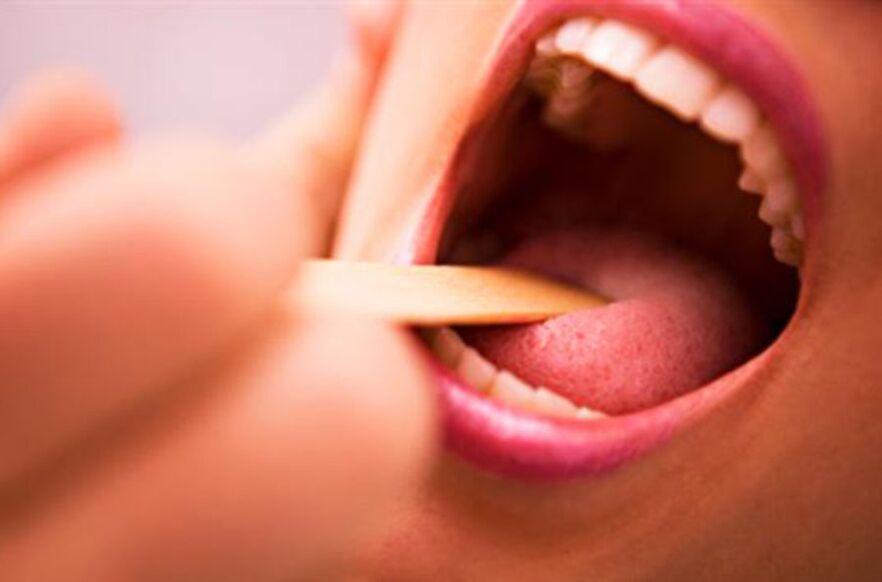
Normally, these parasites breed in the mouth.:
- Trichomonas;
- oral amoeba;
- Diptera larvae.
Any parasite, whether in the intestine or in other parts of the human body, forms a special clinic depending on its diversity and number.General symptoms: skin rash, symptoms of poisoning, weight loss, nausea, weakness.Parasites living in the mouth can worsen existing diseases, trigger tooth loss, and pus-filled plaques on the tongue/mucous membrane.The most noticeable sign is an unpleasant smell from the mouth.There may also be reluctance to eat.
It is possible to determine the presence of worms by certain signs: sore throat, itching in the throat, and movement is felt in the tissues of the pharynx.The doctor will provide an explanation of the treatment regimen, and he will also diagnose the parasite.Medicines themselves are contraindicated and can harm the body, especially children.
Tapeworms: parasites and their treatment
We've all seen pictures of tapeworms in school.Tapeworms are large tapeworm parasites.Worms can reach a considerable length (several meters), have a head, a kind of "valve" with a suction cup and a hook, which allows them to cling to the intestinal wall in the human body.If the body is infected with tapeworms, then taeniasis or cysticercosis is diagnosed.You can become infected by ingesting parasite eggs or larvae.
The clinical picture given by the infection is as follows:
- Diffuse cysts;
- Allergies;
- Bacterial infection;
- Fever condition.
Pharmacological treatment is based on the introduction of active components that are not absorbed by the intestine and kill worms.The doctor will tell you how the results are obtained and where they are taken.
Removal of bovine tapeworms, tapeworms or other parasites should be done by a doctor.It is important to remove worms as soon as possible, because they negatively affect the functioning of organs and systems.